Cable Gland vs Cable Terminal: What's the Difference?
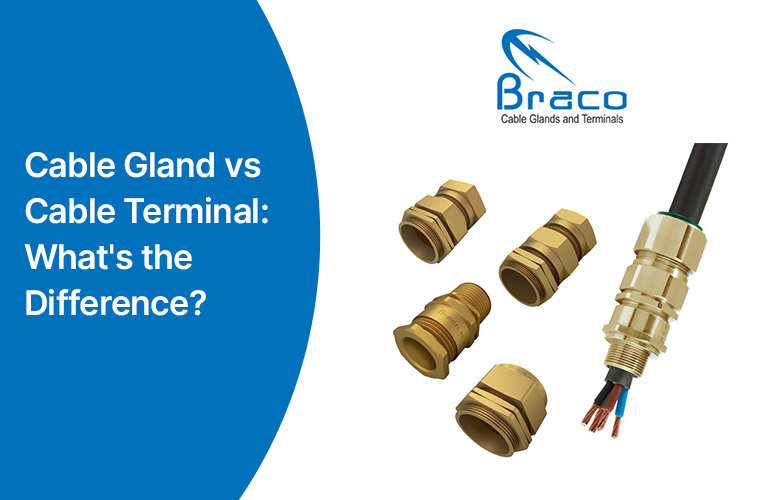
In the realm of electrical engineering, being precise and safe are non-negotiables. Whether it's a massive industrial site, or small solar-powered pole, every connection point counts. As such, security and efficiency must be achieved at every termination. Among the many components that ensure reliability and efficiency are cable glands and cable terminals; while both are integral components, they play distinct roles.
Although cable glands and cable terminals are often mentioned together, these two accessories both have different functions in cable management and termination. Knowing the differences, and purposes of both components, is vital when needing to choose a component for your application: one that will serve your needs long-term, with safety, and regulatory compliance.
The Basics: What Are Cable Glands and Cable Terminals?
Before making comparisons it is helpful to understand the role of both components ans what they do.
What Is a Cable Gland?
Cable glands, also known as cable connectors, and strain relief devices, are devices designed to attach and secure the end of an electrical cable with a piece of equipment, whether that is a control panel, junction box or electrical enclosure. The purposes of a cable gland are to:
● To provide sealing and strain relief
● To maintain the cable's ingress protection (IP rating)
● To prevent dust, dirt or moisture from entering the enclosure
● To ensure mechanical retention and safety
Cable glands are important in industrial environments where cables are subject to contamination with dust, chemicals, and extreme mechanical stress.
Typical materials include brass, stainless steel, aluminium, and nylon. Applications include electrical panels, automation systems, machinery, outdoor installations & hazardous locations.
What Is a Cable Terminal?
A cable terminal (or lug) is a device used for making an electrical connection to a terminal block, busbar or electrical apparatus from a wire or cable, creating a secure connection point while avoiding exposure or damage to the conductor strands. Common materials include copper, aluminium or tinned versions used for corrosion protection. Applications include switchboards, power distribution systems, battery connections and transformers.
Core Difference Between Cable Gland and Cable Terminal
| Parameter | Cable Gland | Cable Terminal |
|---|---|---|
| Function | Seals and secures cable entry points to equipment | Connects conductor ends to terminals for power or signal transmission |
| Primary Role | Mechanical protection and environmental sealing | Electrical continuity and termination |
| Material | Brass, stainless steel, aluminium, plastic | Copper, aluminium, or tinned copper |
| Installation Point | Cable entry to equipment or enclosure | Cable end to electrical device or busbar |
| Protection Level | Offers IP and explosion-proof ratings | Offers electrical contact integrity |
| Industry Standards | IP68, ATEX, IECEx | IS/BS/IEC standards for conductivity |
| Accessory Type | Cable accessory | Termination accessory |
In short:
● Cable glands = mechanical and environmental protection.
● Cable terminals = electrical connection and conductivity.
Understanding Cable Connection and Termination Methods
Cable termination includes both glands and terminals from entry through termination. Here's how it all fits together:
Cable Gland Connection:
When a cable enters into a panel, or machinery, it is the gland that secures the outer sheath of the cable. The gland provides a grip around the outer insulation, thereby helping protect the internal conductors by preventing movement or strain on them. In industrial applications, the gland also provides an explosion-proof seal or an IP rated protection.
Cable Terminal Termination:
After the cable has reached its end point within the equipment, the conductor is stripped from the insulation and terminated to the cable terminal (also known as a lug). The cable terminal provides a means to connect the wire to screw, stud, or clamp providing a secure connection for the purpose of current flow with the least amount of resistance.
Both the gland and terminal are part of cable connection systems; however, they are designed to perform separate and complementary – not overlapping – functions.
Various Types of Cable Glands & Their Usage
a. Single Compression Cable Glands
These are suitable for light-duty applications. A single compression cable gland seals a cable at one point, providing residual dust, moisture, and corrosion protection.
Used in: indoors, electrical panels, and non-hazardous locations.
b. Double Compression Cable Glands
Provide sealing for both the inner and outer sealing points. In these, double compression will provide a higher level of protection from tension/pull, and ingress into the enclosure.
Used in: outdoor, industrial, or hazardous locations.
c. Explosion Proof Glands
Conform to ATEX and IECEx standards. The explosion proof gland is made for oil & gas or mining applications.
Used in: refineries, chemical plants, or offshore.
d. Nylon or Plastic Glands
Are light-weight, corrosion resistant, and inexpensive. Used to seal cables in smaller machinery or control panels.
Used in: electronics, computerized appliance, or smaller industrial units.
e. Brass or Aluminum Glands
Durable and conductive and are suitable for heavy duty and industrial applications.
Used in: manufacturing plants, construction sites, or high temperature.
Cable Lug Types
a. Copper Lugs
They provide high conductivity and resistance to corrosion and are suited for high current connections.
Used in: transformers, switchgear & power panels.
b. Aluminum Lugs
They are lightweight and inexpensive, primarily used for aluminum conductors.
Used in: overhead distribution and substations.
c. Bi-Metallic Lugs
They are for connections between dissimilar metals, where copper and aluminum are combined.
Used in: mixed wiring systems to avoid galvanic corrosion.
d. Ring Terminals
They have a circular end with holes to provide a solid connection that will resist vibration.
Used in: control panels and automotive applications.
e. Pin or Fork Terminals
They allow quick connections and disconnections of circuits.
Used in: compact control systems and instrumentation panels.
Cable termination methods: How termination methods function
The efficiency of any electrical system depends on how well its cables are terminated. Common methods are as follows:
a. Crimping
A mechanical process, crimping mechanically deforms the terminal onto the end of the conductor or cable using a crimping tool.
Advantages: provides a strong connection which is resistant to vibration and is, corrosion free.
b. Soldering
Solder is heated and melted in place so that it fuses the individual strands of conductor wire with the terminal.
Advantages: soldering is ideal for small electronics, low current applications.
c. Mechanical Clamping
Mechanical clamping uses screws or bolts to hold the conductors in place:
Advantages: you can reuse the same connection in the future and is ideal for large power cables.
d. Compression Termination
Compression termination relates to the termination of large cables, where
Selecting the Proper Cable Gland and Terminal
Choosing the correct accessory can mean the difference between a safe, reliable, and efficient installation, or one that is prone to failure.
Key components to consider:
1. Type of cable
For armoured cables, brass double compression glands are to be used.
For unarmoured or flexible cables, nylon or single compression glands will suffice.
For copper conductors, copper or tinned copper terminals should be used.
For aluminium conductors, aluminium or bi-metal terminals should be used.
2. Your environment
Industrial environments vary greatly, from dusty factories to offshore rigs.
Outdoor/Harsh: weatherproof glands made of brass or stainless steel would suffice.
Indoor/Controlled: nylon or plastic glands would suffice.
High vibration: use either ring or crimped terminals for a secure connection.
3. Temperature and chemical resistance
Choose materials rated for your operational environment: for example, nickel-plated brass glands can withstand some corrosion, and fluctuating temperatures, while tinned copper terminals will resist oxidation.
4. Size and compatibility
Always match the terminal or gland to the cable diameter and conductor size; please refer to the cable lug size chart and the gland size chart.
5. Compliance/certification
Make sure the accessory conform to:
● IEC 62444 for cable glands
● IS/BS standards for cable lugs/terminals
● ATEX or IP68 for hazardous environments.
Common Mistakes in Cable Connection
Even seasoned engineers can make errors that affect system reliability:
| Mistake | Impact |
|---|---|
| Using mismatched gland size | Leads to improper sealing and cable slippage |
| Over-tightening the gland | Damages cable insulation and causes current leakage |
| Poorly crimped terminal | Increases resistance and heating |
| Mixing copper and aluminium lugs directly | Causes galvanic corrosion |
| Skipping protective sealing | Reduces IP rating and invites moisture ingress |
A disciplined installation process ensures longer life, minimal maintenance, and greater safety.
The Function of Cable Accessories in Industrial Electrical Systems
Cable glands and terminals are just a small part of the broader ecosystem of cable accessories designed to ensure safe operations. Other important accessories are:
● Cable ties and cleats to guide and relieve strain on cables
● Heat shrink sleeves to insulate and protect sleeving
● Cable markers to identify or label wires
● Connectors and junction boxes to extend and branch circuits
The use of any and all of these accessories are committed to maintaining a cable management system that is organized, efficient, and safe. This is critical for both industrial and commercial environments.
The Importance of Quality
Selecting the correct gland or terminal is not just about function, but also about safety, compliance, and reliability! The use of low-quality materials can lead to:
● Electrical faults or short circuits
● Downtime to the system
● Significant and expensive frequency of maintenance
● Safety issues including fires or electrical shock
This is why major manufacturers such as Braco Electricals are preferred suppliers for solid cable accessories around the world. Braco has decades of experience in the production of high-quality cable glands, lugs, and electrical accessories that are manufactured to meet international standards of compliance, giving its users peace of mind with their performance and applications.
Braco Electricals: Precision, Protection and Performance
Braco Electricals is a leading supplier of electrical components worldwide, including, but not limited to:
Traditional industrial cable glands in every conceivable material, including brass and stainless-steel cable glands, and both single and double compression cable glands 60mm (2.25") or larger.
High conductivity copper and aluminum cable terminals
Conclusion
To wrap things up, although cable glands and cable terminals may appear to serve the same function, they fulfill different needs, yet their purposes complement one another: Cable glands provide protection and secure the entry of cables. Cable terminals provide solid connections. They represent the very foundation of safe, reliable, and efficient power distribution systems. By selecting quality products from reputable manufacturers such as Braco Electricals, all of your connection - mechanical or electrical will serve with the expectation that they will perform well over the lifespan of the components.