How to Select the Appropriate Cable Lug for Industrial Applications?
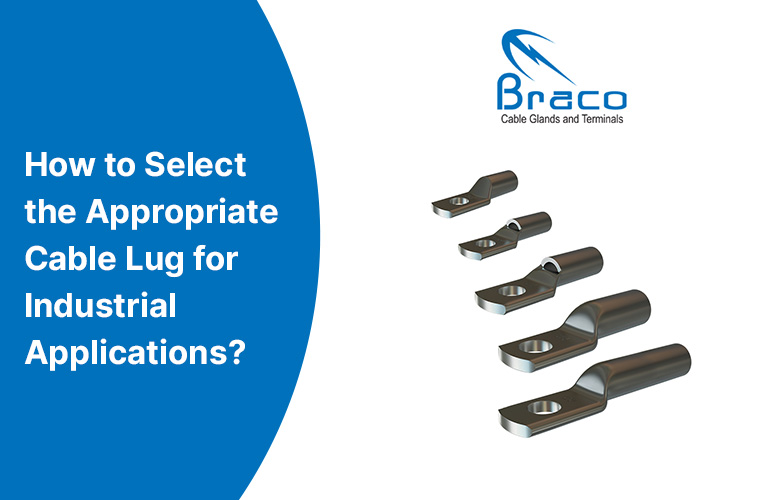
In industrial electrical systems, small components are often responsible for big jobs. One of the critical components is a cable lug, which is key to electrically connecting conductive materials in a safe and reliable manner. While cable lugs may just look like simple metal fittings, the type you choose can make the difference between an electrical system operating at its best versus one that is inefficient or a failure.
This guide will summarize what you need to know about cable lugs, types of materials such as copper and aluminium cable lugs, what size to consider, and how to choose the most appropriate cable lug for your application.
What Are Cable Lugs and Why Are They Important?
A cable lug (cable terminal) is an electrical connector used to safely connect cables to electrical devices and equipment or to junctions. It would be like the bridge between a power cable and its connection point.
In industrial settings - like manufacturing plants or power stations - high voltages and heavy currents will be handled by cables. A properly selected and installed cable lug will provide:
Reliable electrical contact with minimum resistance.
● Safe terminations so that there is no fraying or overheating of wire.
● Maintenance and replacements are predictable.
● A cable that is designed to resist corrosion and provide cable life expectancy.
Understanding the Different Types of Cable Lugs
There are several types of cable lugs available, each intended for certain applications and industries; below are some of the most common types of cable lugs found in industry.
1. Ring Type Cable Lugs
A ring lug has a closed, circular end that attaches to a terminal post for a solid connection. After it is installed, it stays connected even with vibration and movement, which makes this style of lug great for heavy-duty industrial and automotive applications.
Best suitable for: Motors, control panels, transformers, power distribution systems
2. Pin Type Cable Lugs
Pin lugs have a simple pin shape at the end, allowing for an easy fit into a terminal block. It creates a quick, reliable connection in small electrical systems.
Best suitable for: Control cabinets, switchgear, compact installation
3. Fork Type (Spade) Cable Lugs
Fork lugs have a U-shaped end to allow for removal and install of a cable lug without completely removing the screw of the terminal.
Best suitable for: Applications that may need to be frequently maintained and fixed or temporary installation, often the control wiring will see this.
4. Tubular (Compression) Cable Lugs
Tubular or compression lugs are some of the most commonly used in industrial environments.
This type of cable lug can come with a single hole, two holes, angled, or long barrel styles.
A hydraulic or mechanical tool is used to crimp the lug to the cable, providing a tight connection that will last a long time.
Best suitable for: Power transmission, substations, and high current applications.
5. Bimetallic Cable Lugs
Bimetallic lugs would be used when the cables and terminals are from different materials (for example, aluminium cable connected to a copper busbar), as these will prevent galvanic corrosion and allow for stable conductivity.
Best suitable for: Power distribution where aluminium and copper conductors touch.
6. Inline or Through-Connectors
These are used to connect two cables from end-to-end. They are crimped on both sides, and are mostly used in power extensions or splicing applications.
Best suitable for: Power cable extensions, control systems, and making outdoor junctions.
Copper vs Aluminium Cable Lugs: Which Should You Choose?
One of the most important decisions when choosing an industrial cable lug is selecting the right material. The two most common types are copper and aluminium, each with distinct advantages.
| Parameter | Copper Cable Lugs | Aluminium Cable Lugs |
|---|---|---|
| Conductivity | Excellent – offers superior electrical conductivity | Good, but lower than copper |
| Corrosion Resistance | High, especially when tinned or plated | Prone to oxidation, needs anti-corrosive treatment |
| Strength | More durable and heat-resistant | Lightweight but softer |
| Cost | Higher | More economical |
| Applications | Power transmission, switchgear, control panels | Overhead lines, transformers, cost-sensitive installations |
In most industrial environments, copper cable lugs are preferred for their reliability and performance. However, aluminium lugs offer a cost-effective alternative for large-scale power distribution where weight and budget are priorities.
Cable Lug Size Chart and Selection Guidelines
Picking a cable lug size is very important in order to create a connection with solid conductivity and mechanical strength. Using the wrong size can lead to unnecessary overheating, arcing, or an overt failure of the connection entirely.
The following is a simplified cable lug size chart for your reference:
| Cable Size (sq.mm) | Copper Lug Hole Size (mm) | Aluminium Lug Hole Size (mm) | Typical Application |
|---|---|---|---|
| 1.5 – 6 | 5 – 6 | 5 – 6 | Control wiring, lighting |
| 10 – 16 | 6 – 8 | 6 – 8 | Domestic/industrial panels |
| 25 – 70 | 8 – 10 | 8 – 10 | Distribution systems |
| 95 – 150 | 10 – 12 | 10 – 12 | Transformers, switchgear |
| 185 – 300 | 12 – 16 | 12 – 16 | Power transmission, heavy machinery |
Tip: Always ensure the lug barrel size matches the cable conductor size. Using undersized or oversized lugs can compromise the connection integrity.
Important Factors to Consider When Selecting a Cable Lug
Choosing the right lug is not solely about getting the size and material correct, rather there are a number of fundamental considerations.
1. Current and Load Rating
Always select a lug rated the same or greater than the current carrying capability of the cable. Using an under rated lug can result in overheating and energy loss.
2. Environment
Considerations for the performance of the lug can be determined by environmental factors including temperature, whether it's a wet environment, or exposure to chemicals or salt air. A tinned copper lug or bimetallic lug would be appropriate in corrosive materials and humid environments.
3. Type of Termination
Whether the lug will be crimped, bolted or soldered might be worth considering. The commonly used method in the Industrial/Commercial sector is crimping as this provides a consistent mechanical and electrical bond.
4. Dissimilar Metals
Avoid connecting dissimilar metals directly, this often contributes to galvanic corrosion. A use of a bimetallic lug is the appropriate option where an aluminium cable is terminated to a copper terminal.
5. Standards Compliance
Make sure the lugs conform to all standards relevant to the product eg.
● IS 8309 / IS 8337 copper lugs in India
● IEC 61238 compression and mechanical connector
● DIN 46235 tubular lugs
This assures the safety, reliability, and compatibility with international systems.
Crimping Tools and Techniques
The performance of a cable lug doesn’t just depend on its type — proper installation is equally critical. Crimping is the most widely used method for attaching lugs to cables. It involves compressing the lug barrel onto the cable strands using hydraulic or mechanical tools.
Best practices for crimping include:
● Use the correct die size for each lug.
● Apply uniform pressure during crimping.
● Avoid twisting or bending the lug barrel.
● Inspect every crimp visually and, if possible, perform a pull test.
For large industrial setups, hydraulic crimping tools ensure precision and consistency across multiple connections.
Applications of Cable Lugs in Industrial Applications
Cable lugs are utilized nearly everywhere in the industrial electrical landscape. Their versatility and dependability are irreplaceable in:
1. Power Generation and Distribution
Utilized for connecting cables to Transformers, circuit breakers & switchboards where there needs to be high current & temperature stability.
2. Manufacturing and Automation
An immediate requirement for connecting control panels, PLCs, and machinery where being precise and durable is important.
3. Oil, Gas, and Petrochemical Plants
Used in hazardous environments where resistance to vibration, temperature, and corrosion are vital.
4. Renewable Energy Systems
Lugs used in solar energy systems and wind energy systems provide a steady flow of current between the solar panels, inverters, and batteries.
5. Transportation and Railways
Quality lugs create reliable power connections between locomotives, signaling systems, and any heavy-duty vehicle.
Common pitfalls or mistakes to avoid
Even seasoned professionals can make mistakes that adversely affect system performance. Heartfelt mistakes to not commit:
● Using lugs that will be of a size that will create the loose connection.
● Abandoning the insulation sleeve, which in this case creates the opportunity for a short circuit.
● Not ensuring surface cleaning were performed prior to, especially for copper and aluminium connections.
● Incorrect crimping or over-torqued the lug damage the cable strands.
The tiny mistakes will add up to baleful inefficiencies over time — inefficiencies that an industrial system can ill-afford.
Why Braco Electricals Is the Leading Range for Industrial Cable Lugs
With decades of experience in Electrical Connectivity Solutions, Braco Electricals is an accredited manufacturer of Industrial Cable Lugs, Connectors and Glands across India and internationally.
Braco´s range is filled with:
● Copper and Aluminum Lugs (tinned & bare)
● Bi-Metallic Lugs and Connectors
● Heavy Duty Compression Terminals
● Crimping Accessories and Tools
All designed and tested to meet international design standards for performance, durability and safety, to provide reliable connectivity in the most challenging of environments.
Braco's precision engineering, high-quality raw materials and commitment to innovation has made them a preferred supplier for a host of industries, from Energy and Automation applications, to Transport and Telecom.
Conclusion
Selecting an adequate cable lug may seem like a trivial item of a technical specification to work through, but in the context of industrial power systems - it is an item that defines performance, safety and life span.
Equipped with an understanding of the types of cable lugs, the difference between Copper and Aluminum options, and following a sufficient cable lug size chart, Engineers and Technicians can deliver improved electrical efficiency, and lower maintenance costs.
When precision and reliability are at stake, Braco Electricals provides, and bridges the gap between quality, performance and this plan.